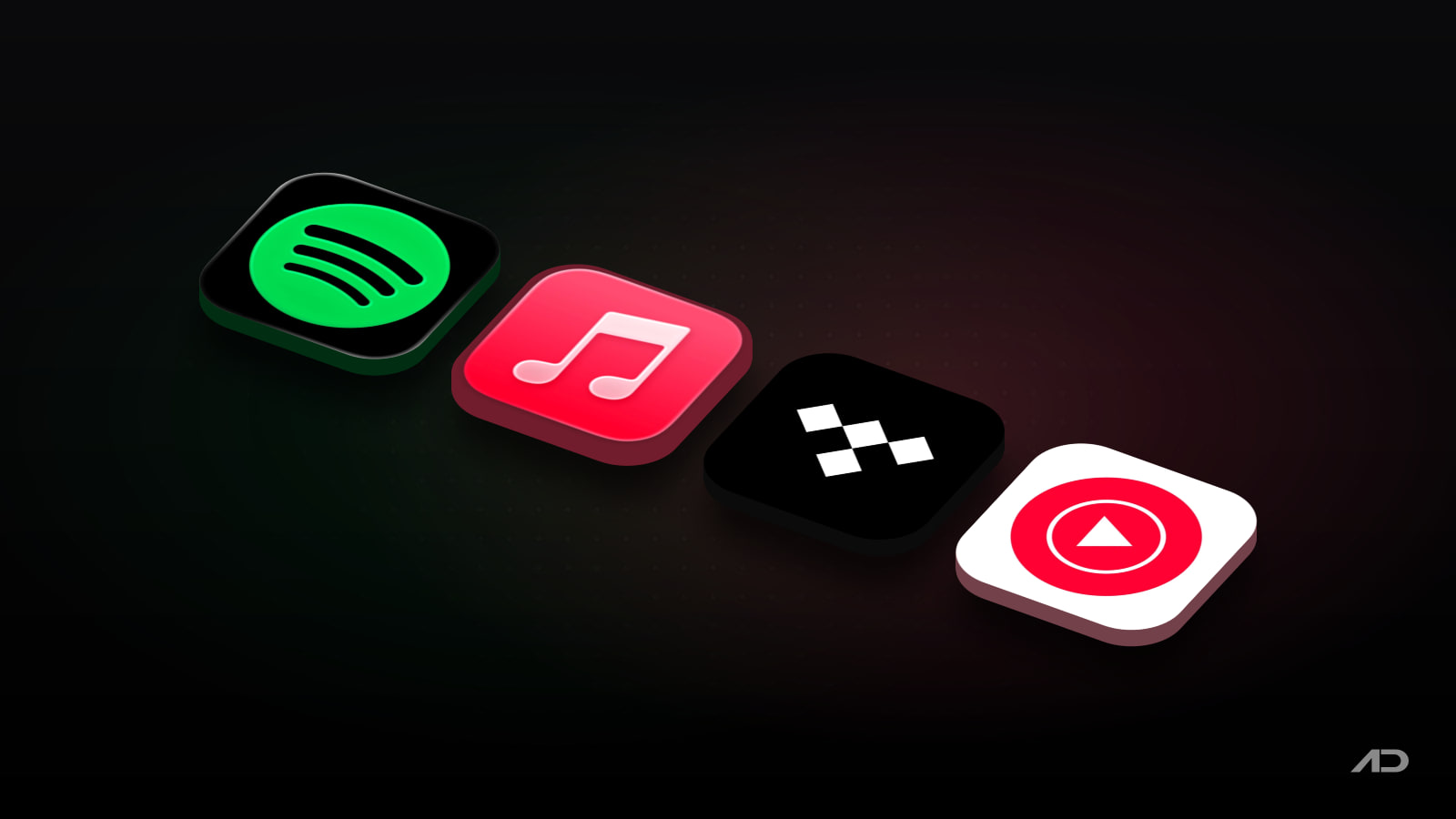
Spotify vs Apple Music, TIDAL, and YouTube Music for Mac
Spotify is the default music service for many people because its recommendations, playlists, sharing features, podcasts, audiobooks, and device support all live in one familiar app. Its Mac experience has also become more competitive now that Spotify Premium supports lossless music on compatible desktop clients.
But Spotify is not the automatic winner. Apple Music offers a native Mac app, lossless and Spatial Audio, and deep integration with Apple hardware for less than Spotify's US Individual plan. TIDAL focuses on high-quality audio, detailed credits, and audiophile hardware. YouTube Music combines official releases with music videos, live performances, remixes, covers, and user uploads that may not exist in conventional streaming catalogs.
This comparison looks at all four from a Mac-user perspective: desktop experience, discovery, audio quality, offline listening, library features, device ecosystems, and current US pricing.
Quick Verdict
Choose Spotify if recommendations, collaborative listening, playlists, podcasts, audiobooks, and seamless handoff between many kinds of devices matter more than having the most Mac-native interface.
Choose Apple Music if you use a Mac, iPhone, AirPods, HomePod, or Apple TV and want lossless and Spatial Audio in a native app at a lower individual price than Spotify.
Choose TIDAL if sound quality, HiRes FLAC, Dolby Atmos, music credits, and integration with serious audio equipment are your priorities.
Choose YouTube Music if you frequently listen to rare tracks, unofficial uploads, covers, live performances, remixes, or music videos and do not mind using a browser on your Mac.
Feature Comparison
| Feature | Spotify | Apple Music | TIDAL | YouTube Music |
|---|---|---|---|---|
| Best for | Discovery, playlists, social listening, podcasts, audiobooks, and broad device support | Apple users who want a native app, lossless audio, Spatial Audio, and ecosystem integration | Audiophiles, detailed credits, HiRes FLAC, Dolby Atmos, and hi-fi equipment | Music videos, rare uploads, live versions, remixes, covers, and personal uploads |
| Mac experience | Dedicated desktop app and web player | Built into macOS as the native Music app | Dedicated Intel and Apple silicon apps for macOS 14 or later, plus web player | Web app in a supported browser; no official native macOS app |
| Highest advertised quality | Lossless FLAC up to 24-bit/44.1 kHz on supported Premium clients | Lossless and Hi-Res Lossless up to 24-bit/192 kHz; Dolby Atmos | HiRes FLAC up to 24-bit/192 kHz; Dolby Atmos | Compressed AAC or Opus up to 256 kbps |
| Desktop offline listening | Yes with Premium | Yes with a subscription | No; TIDAL says offline use is mobile-only | No; offline playback is limited to mobile apps |
| Discovery strengths | Personalized mixes, daylists, Release Radar, Discover Weekly, DJ, radio, and a large playlist culture | Human curation, personalized stations, Discovery Station, radio, charts, and Apple Music Classical | Editorial playlists, personalized mixes, radio, credits, and music-focused discovery | YouTube history, mixes, video recommendations, search, and an unusually broad long-tail catalog |
| Social and sharing | Strong: collaborative playlists, Jam, Blend, activity features, and widely shared links | Collaborative playlists, SharePlay, profiles, and friend activity | Playlist sharing and Live sessions, but a smaller social network | Collaborative playlists and easy YouTube sharing |
| Other media | Podcasts, music videos in supported markets, and audiobooks; 15 audiobook hours are included with eligible US Premium plans | Music videos, live radio, artist interviews, concerts, and Apple Music Classical | Music videos, interviews, editorial features, and artist-focused content | Music videos, live performances, covers, remixes, podcasts, and other YouTube content |
| Free tier | Yes, with ads and restrictions | No permanent on-demand free tier; trial offers are available | No permanent free tier; trial offers are available | Yes, with ads and feature restrictions |
| Individual price snapshot | $12.99/month in the US | $10.99/month in the US | $10.99/month in the US, plus applicable tax | $11.99/month in the US; full YouTube Premium with Music is $15.99/month |
Spotify
Spotify has the most complete all-purpose package in this comparison. Its recommendations are built into nearly every part of the service, from Discover Weekly and Release Radar to daily mixes, daylists, artist radio, playlist suggestions, and its AI-powered DJ. The result is an app that is especially good at answering the question, "What should I play next?"
Spotify also benefits from network effects. Friends are more likely to send Spotify links, public playlists are easy to find, and features such as Blend, Jam, collaborative playlists, and listening activity make music feel social. Spotify Connect is another major advantage: the Mac app can act as a remote for compatible speakers, TVs, consoles, phones, and other devices while playback moves between them.
The service is broader than music. Podcasts and audiobooks sit in the same app, and eligible US Premium Individual subscribers and plan managers on Duo or Family receive 15 hours per month from Spotify's audiobook subscriber catalog. That is convenient if you want one subscription and one queue for several types of audio, but users who want a music-only interface may find the app busier than Apple Music or TIDAL.
Spotify's audio-quality disadvantage has narrowed. Premium now offers lossless FLAC at up to 24-bit/44.1 kHz on supported mobile and desktop app versions and selected Spotify Connect devices. That is a meaningful upgrade over its familiar 320 kbps "Very high" setting, although Apple Music and TIDAL advertise Hi-Res Lossless up to 24-bit/192 kHz. Lossless availability can also depend on the track, app version, rollout, and playback device.
The Mac app supports offline albums and playlists for Premium users, with up to 10,000 downloaded tracks on each of five devices. It is a capable desktop client, though it looks and behaves consistently across platforms rather than feeling specifically designed for macOS.
Pricing is the main pressure point. Spotify Premium Individual is currently $12.99 per month in the US. Student is $6.99, Duo is $18.99, and Family is $21.99. A free ad-supported tier remains available, which makes Spotify the easiest service here to try indefinitely without paying.
Choose Spotify if discovery, social features, podcasts, audiobooks, Spotify Connect, and a familiar cross-platform experience are worth the higher subscription price.
Apple Music
Apple Music is the most natural fit for an Apple-centered setup. The Music app is included with macOS, works with the Mac's media keys and system features, and connects cleanly with iPhone, iPad, Apple Watch, Apple TV, HomePod, CarPlay, Siri, AirPlay, and AirPods.
Its biggest value advantage is that audio upgrades are included in the standard subscription. Apple advertises more than 100 million songs, with most of the catalog available in lossless ALAC. The Mac app supports Lossless up to 24-bit/48 kHz and Hi-Res Lossless up to 24-bit/192 kHz. Hi-Res playback may require an external digital-to-analog converter, and Bluetooth headphones do not deliver the full lossless signal.
Apple Music also includes Spatial Audio with Dolby Atmos on supported tracks and devices. This is especially appealing with compatible AirPods, Beats headphones, Mac speakers, or a home theater setup. The separate Apple Music Classical app is included for subscribers, although its dedicated app experience is primarily on mobile devices rather than Mac.
Discovery has improved, but its style differs from Spotify. Apple combines personalized stations, Discovery Station, mixes, charts, artist stations, live global radio, editorial playlists, interviews, and album-focused browsing. Spotify tends to feel more aggressive about generating an endless stream tailored to your habits; Apple Music often feels more deliberate and closer to browsing a traditional record collection.
The Music app can combine Apple Music with songs you own, imported files, purchased music, smart playlists, and local library management. Subscribers can download albums and playlists to a Mac for offline playback. This makes Apple Music particularly strong for people whose library mixes streaming with ripped CDs or files collected over many years.
Apple Music Individual costs $10.99 per month in the US, Family costs $16.99 for up to six people through Family Sharing, and Student costs $5.99. There is no permanent ad-supported on-demand tier.
Choose Apple Music if you want the best combination of Mac integration, high-resolution audio, Spatial Audio, local library tools, and price.
TIDAL
TIDAL has a clearer music-first identity than Spotify. Its Individual plan includes more than 110 million tracks, lossless audio, HiRes FLAC, Dolby Atmos, personalized mixes, editorial playlists, and extensive artist and production credits.
Audio quality is the central attraction. TIDAL's Max setting supports HiRes FLAC up to 24-bit/192 kHz, while its High setting provides CD-quality 16-bit/44.1 kHz FLAC. The actual format depends on what the artist or label delivered, so not every track is available at the maximum resolution. TIDAL also supports exclusive output and passthrough-oriented features on compatible desktop and audio setups, making it easier to build a serious listening system around an external DAC.
TIDAL Connect sends playback to compatible speakers and hi-fi components while the Mac or phone acts as the controller. Its supported-device list includes products from many specialist audio brands, which is an important distinction from services designed mainly around phones, computers, and mainstream smart speakers.
The Mac app is available separately for Intel and Apple silicon and currently requires macOS 14 or later. HiRes FLAC works in both the desktop and web applications. However, TIDAL has a surprising Mac limitation: its official support documentation says offline use is available only in the mobile app. Spotify and Apple Music are better choices if you need downloaded music on a MacBook while traveling without reliable internet.
TIDAL is also good for listeners who care about who made a recording. Songwriter, producer, musician, and engineering credits are more prominent than on most competitors, and credits can lead to other work by the same contributor. The service's recommendations and playlists are capable, but its smaller social footprint means fewer shared playlists and less chance that a friend already uses it.
TIDAL Individual costs $10.99 per month in the US, Family costs $16.99 for up to six accounts, and Student costs $5.49, plus applicable sales tax. There is no permanent free tier.
Choose TIDAL if your Mac is connected to good headphones, speakers, or a DAC and you value sound quality, hardware integration, and recording credits more than social features or desktop downloads.
YouTube Music
YouTube Music wins on catalog shape rather than traditional audio quality. It combines licensed albums and singles with the enormous range of music already on YouTube: official videos, live performances, DJ sets, covers, remixes, demos, regional releases, fan uploads, and obscure recordings that may never reach Spotify, Apple Music, or TIDAL.
That makes search unusually powerful. A vague lyric, description, video memory, or unofficial title can still lead to the right recording. Audio and video versions are closely connected, and recommendations benefit from years of YouTube viewing and listening history. For users who move constantly between songs and music videos, no rival is as direct.
YouTube Music also lets you upload up to 100,000 personal songs to your library. Uploaded music can be played without a Premium subscription, although uploads remain private to the account and do not become shareable catalog tracks. This is useful for rare purchases, demos, live recordings, or albums unavailable in your region.
The Mac experience is the weakest here. YouTube Music runs in a browser, and you can install the website as a web app through a compatible browser, but Google does not provide a dedicated native macOS client. Official documentation also limits offline and background-play benefits to mobile apps, so there is no supported way to download Music Premium tracks for offline playback on a Mac.
Audio tops out at 256 kbps AAC or Opus rather than lossless. That can sound perfectly good for casual listening, laptop speakers, and Bluetooth headphones, but Apple Music, TIDAL, and Spotify Premium now offer higher-quality lossless options.
YouTube Music has a free ad-supported tier. The standalone US Music Premium plan is currently $11.99 per month. The full YouTube Premium plan is $15.99 per month and includes YouTube Music Premium alongside ad-free viewing and other Premium benefits across YouTube. Prices shown at checkout can vary by billing method and region.
Choose YouTube Music if access to the broadest mix of official and unofficial music matters more than a native Mac app, lossless audio, or desktop downloads.
Which One Should You Use?
Use Spotify if discovering new music, following public playlists, listening with friends, controlling many devices, and keeping podcasts or audiobooks in the same app are central to your routine.
Use Apple Music if you own several Apple devices, keep local music files, want offline listening on your Mac, or want lossless and Dolby Atmos without paying more than the standard subscription.
Use TIDAL if you have high-quality wired headphones, a DAC, powered speakers, or hi-fi equipment and want the service that puts audio formats and recording credits closest to the center.
Use YouTube Music if your listening regularly includes live sets, rare uploads, covers, remixes, music videos, or a large personal collection you want to upload.
Final Verdict
Spotify remains the best all-round music service, especially for discovery, sharing, collaborative listening, podcasts, audiobooks, and moving playback between devices. Lossless support fixes one of its largest technical weaknesses, but its US plans now cost more than comparable Apple Music and TIDAL subscriptions.
Apple Music is the best choice for most Apple-focused Mac users. It has the most native desktop experience, excellent library management, Mac downloads, lossless and Hi-Res Lossless, Spatial Audio, and a lower individual and family price than Spotify.
TIDAL is the best audiophile choice. Its HiRes FLAC, Dolby Atmos, credits, and specialist hardware support are compelling, although the lack of offline playback on Mac is a meaningful limitation.
YouTube Music is the best catalog wildcard. It reaches far beyond standard album catalogs, but its browser-first Mac experience and compressed audio make it less attractive as a premium desktop music app.
My practical recommendation:
- Pick Spotify for discovery, social listening, podcasts, audiobooks, and device flexibility.
- Pick Apple Music for the strongest overall Mac and Apple ecosystem value.
- Pick TIDAL for focused listening on high-quality audio equipment.
- Pick YouTube Music for rare recordings, videos, remixes, and personal uploads.
Note: Features and US prices are current as of June 2026. Catalog availability, lossless rollouts, trials, taxes, regional pricing, and subscription benefits can change, so verify current details on each service's official website before subscribing.

FaceScreen: Show your face and name on screen.
A stylish floating camera for video calls, live streams, and screen recordings. Available for Mac, iPhone, and iPad.